Showing posts with label Music. Show all posts

14 October 2012

Sing one for the old times.

What has happened to me? Have I forgotten about this blog's most fundamentally annoying feature? The Mountain Goats have a new album out, and I haven't done a week-long feature or a song-by-song analysis. Have I consigned another band to the used-to-be-my-favorite pile, along with Pearl Jam and Wilco?

Perhaps, and Transcendantal Youth is actually a nice album to mark the shift. In retrospect I can tell I was trying a little too hard to enjoy the last few Mountain Goats albums (Heretic Pride, The Life of the World to Come, and All Eternals Deck), and if I wrote up those albums now I think I'd be more likely to call out the clunkers, of which there are definitely a few on each album. But now I'm feeling a certain distance even from the stronger songs, so let's talk about why.

I can't get into details here, but I had some bad times in 2004, and to me it seemed like the evangelical Christianity I'd grown up with didn't have the resources to help me make sense of what I was going through. So I spent a few years trying to cobble together a new way of looking at the world. This involved a lot of intellectual posturing, as any long-time reader of this blog will have seen quite clearly, but it also involved some emotional reconstruction. And there's this running theme in Mountain Goats song of compassion for people who are struggling to get free of trouble that overwhelms them, even those who thrash about in really counterproductive ways. See "The Best Ever Death Metal Band in Denton" and "You Were Cool" for the classic examples of this. Or, from the new album, "Until I Am Whole":
On a picnic bench alone,
Watch the sky go dark.
Dig my nails into my hands,
Hope it leaves a mark.

I think I'll stay here,
Til I feel whole again.
I don't know when.
I mean, the exact details aren't mine, but...

How could you live, being this raw all the time? I've managed to get a job, an apartment, various bank accounts, and so forth, nothing special, a fairly standard social role, and it seems like you just have to close your mind to these things to function. Perhaps I could put my headphones on and listen to "In Memory of Satan" (a song about the weeks or months when you've had to cut yourself off from all your friends to be alone with your soul's darkness) and feel about it the way I used to feel about "Distant Stations" from All Hail West Texas, but the song is about a past self now, and as a rule I don't like my past selves. In your late twenties, you can't let stuff like that cut through.

None of this is to say that I don't enjoy Transcendental Youth; I'm a sucker for these horn arrangements and the band doesn't sound like it's just trying out random genres in the studio like they have on some other albums. It's just a long way of saying that this is probably this blog's last long Mountain Goats post.

24 August 2012

Top fifty.

Oblique thoughts on a controversy too silly to link to.

I have been reading some poems lately, never mind by whom, and I've been a little sad to notice how strongly I react to the gender of the author. A man writes well about women, and I ask: "Would I say that about someone?" A woman writes well about men, and I ask, "Would she say that about me?" See when I identify with the speaker? So you ask me to make a list of the albums that have meant the most to me, and I have to admit, it's probably going to have a lot of men on it. More often than I'd like to admit, I've gotten into a book or an album or a movie because its perspective on the world was mostly similar to mine.

It's a sign of cultural privilege, I think, that I wasn't more often made (or even asked) to reckon with perspectives different from my own. It would be a sign of maturity to more deliberately seek out such perspectives. To the extent I've done this, it actually hasn't been so bad.

All this is to say that a list of my favorite music, it would reflect a lot of things about the culture I come from, in ways that even self-awareness can't efface.

(If you must know the context, I can provide this link without feeling irresponsible.)

26 July 2012

Transcendental Youth news.

I've been failing to bother people with excessive Mountain Goats posting. That used to be a big part of this blog, and now all I can do is collect a few things related to the forthcoming album.

As the Convergence of All that I Love* continues, John Hodgman's written an appreciation of the Mountain Goats as part of the Transcendental Youth album press release. In part:
These are the consolations; and if some of his songs suggest that there are real hells on earth, other songs remind that the heavens are equally close at hand. 
(Sometimes they are even the same songs.) 
It is my impression that this is the ecstasy John Darnielle is feeling: that thrill of having survived, escaped for even a second to enjoy those small transcendent delights, and to sing of them.
And then there's a new single, "Cry for Judas":
The Mountain Goats - Cry for Judas by MergeRecords

UPDATE: Horn arrangements are by Matthew E. White, whose music, it turns out, is ear-grabbing:
Matthew E. White "One of These Days" by Matthew E. White

*Superchunk, the Mountain Goats, and John Hodgman all used to be separate pop-culture obsessions for me. But then the Mountain Goats hired Superchunk drummer Jon Wurster, and soon enough Mountain Goats singer John Darnielle was appearing on Superchunk albums and releasing records on Superchunk singer Mac MacCaughan's record label. As these three merge (so to speak) into a single entity, I'm finding you can get to most of the other things I dig in just two or three steps.

17 July 2012

Two reviews.

No doubt faithful readers noticed that I abandoned this poor blog for Twitter. But if there are dark days ahead for Twitter, maybe I should take a look back at ol' Blogspot.

Anyways, since it's nice to have links that stay up at the top of the page a little longer and are properly archived, here are two reviews I've recently written:

  • Review of The Marriage Plot by Jeffrey Eugenides, for Fare Forward - My friend Peter's starting a Christian review of ideas, aimed at millenials, and he asked me to review this book for the first issue. (My favorite essay from the issue, by the way, is Margaret Blume's "Beauty and the Beast.") I think that if I ever review another novel, I need to do more to preserve my first reactions. By the time I started writing this particular short review, I'd read the book three times and had lost all sense of perspective. But I think the space constraints kept me from messing it up too badly.
  • Review of Precious Remedies against Satan's Devices, by The Welcome Wagon, for Mockingbird -  I got to see The Welcome Wagon's CD release show in Brooklyn, and enjoyed it quite a bit. Spent a few e-mail paragraphs dissecting the songs with friends, and so I had some ideas rattling around in my head. Then, when I was down in Charlottesville catching up with DZ from Mockingbird, he was interested in a record review, so it worked out nicely. I'm happy with this one. I usually try to keep my guard up about day-to-day faith when I'm writing online, aiming instead for the objective tone, but I didn't worry about that so much here.
I'm working on another book review, and if it gets published I'll post about that one as well.

05 October 2011

Crossover.

Last night I heard Christopher O'Riley and Matt Haimovitz perform pieces from their new album Shuffle.Play.Listen. I'll have more to say about the album once I listen to it, but the concert was an evening well spent. The program was a mix of twentieth-century composed ("classical") music and O'Riley's piano/cello arrangements of rock songs.


This sort of mixed program -- Webern to Radiohead to Stravinsky -- is great for someone coming from indie rock to classical because it draws connections from things I understand fairly well to things I don't really get yet. The way Haimovitz absolutely shreds on that John McLaughlin solo, you suddenly start to wonder if "shredding" is a good way of understanding the Stravinsky tarantella. Or when he somehow captures Regine Chassagne's phrasing and intonation on the melody of Arcade Fire's "In the Backseat," you start figuring out how to follow the phrases in Martinu's "Variations on a Slovak Folksong." Even if I'm not the best person to judge the quality of the musicianship, which, to me, seemed incredibly high, I can tell when musicians are revealing new layers in songs I know well and introducing me to songs and compositions that I ought to know well.

15 August 2011

No, seriously, watch the throne.

OK, I think this is funny:
'Watch the Throne' (Roc-a-Fella/Roc Nation/Def Jam) is one of the first major hip-hop releases in years to avoid significant prerelease leaks--something that seemed virtually unavoidable in the digital age. [...] Jay-Z and West implemented an Internet-free recording space. While travel schedules had reduced much of the creation of 'My Beautiful Dark Twisted Fantasy' to a series of emailed session tracks, Watch the Throne was recorded in-person in makeshift setups. Tracks were saved directly to password-protected external hard drives that remained locked in Goldstein's Pelican briefcase. At no point during the album's creation did works-in-progress reside on laptop hard drives. [...] Outside producers for the project, such as Q-Tip, the RZA, the Neptunes, Swizz Beatz, Hit-Boy and No I.D., were asked to appear in person to preview and submit potential beats. Email wasn't an option to send mixes; when West wanted to hear a track, he would demand that producers travel to his location to work on a track."
On the other hand, it worked. It was quite nice to hear a big new album all at once and recognize only the single.

27 June 2011

Envy.

Apparently Alan Jacobs happened to see a guerrilla performance of one of my favorite pieces, Tallis's Spem in Alium. It's a motet for forty voices, and it's pretty clear that standing among the singers is the right way to hear the piece. Alas, I've had to make do with various stereo systems. Here's the video:


The sound quality's pretty low, so here's a better recording:

07 June 2011

You're not punk.


The Mountain Goats cover Jawbreaker

I knew these guys would knock it out. Love that he replaced "Kerouac" with "Didion."

28 May 2011

We'll be jumping and having fun.

Wednesday's post about Purcell's bawdy tavern songs began as a response to one of Ned Resnikoff's posts, but I didn't have a lot of time and couldn't make the connection.

What happened was that Ned's remark about the "poverty of ambition" of pop culture producers got me thinking about how in Purcell's time the same guy could write tavern songs as well as the music for the Queen's funeral. This was at least two distribution systems ago: not only before the rise of recording and amplification, but before the major development of the middle-class concert-hall system. So the sort of role that Purcell doesn't exist anymore, and probably can't.

Yet I don't think it's crazy to admire and desire a cultural form supple enough to be appropriate to a wide range of human experiences. We can use pop music for its sentimental evocation of experience, but its mawkishness at weddings and funerals (and I hope you know what I'm talking about) reveals its limitations.

However, after watching the first two episodes of Treme's first season, I'm thinking that maybe the jazz culture in New Orleans is healthy in the same way as English baroque culture was in the seventeenth century. In just those two episodes, Wendell Pierce's trombonist performs in a festive street parade, in a bar where Elvis Costello is hanging out, at a funeral, and in a strip club. Want better culture? Figuring out what pre-Bach composers and New Orleans jazz have in common is a good start.

25 May 2011

Bawdiness.

Henry Purcell was a seventeenth-century English composer. He wrote a lot of serious and beautiful music in an English baroque style. But he also wrote and published “catches,” or men's tavern songs. Some of these are stunningly explicit. (Explicit enough that I'm not comfortable quoting them on my blog.) Going from Dido and Aeneas or Funeral Anthems for Queen Mary to the bawdy catches is jarring.

In modern pop-culture terms, it would be like the same person writing L'il Wayne's lyrics andTabula Rasa.” Or maybe it would be like Seth Rogen secretly writing the screenplay for The Lives of Others.

Anyway, for a pretty tame Purcell catch, try “Come, come let us drink.”

06 May 2011

Phil Cook, a musician.

There's a great write-up in the Independent Weekly on Phil Cook, a member of Megafaun and one of the best rock stars. Phil has a solo album coming out soon on Trekky Records. Give him a listen if you like rootsy folk and blues.

This stuff makes my day.

05 May 2011

Hysteria, and the morning after.

The AV Club's had two interesting essays this week that are at least worth a skim for anyone interested in rock music.

The first one is a long account of the pop-cultural role of Def Leppard's Hysteria. The essay kicks off a series of reflections on various number-one pop records, and, suitably, there's a long discussion of what number-one records used to mean back in the days when there was a single dominant distribution machine.
…we live in a culture where the terms “mainstream” and “underground” have become virtually meaningless, as practically every song by every band ever is equally accessible, frequently at no cost, to anyone with an Internet connection and the interest to seek it out. “Pop” is no longer short for “popular”; it’s simply one choice in a sea of genres that can be programmed into your music player in order to block out all other kinds of music. Music-related fame has been democratized to a greater degree than at any point in the media age, dramatically eroding the concept of fame as we once knew it.
I think this overstates the case, but we're definitely on this trajectory. It's exciting, in a way, that the importance of channels of production (record labels, radio) are fading: I'm almost hoping we'll get to see some kind of ultimate showdown between aesthetics and marketing for the soul of music.

The second essay is about Pete Yorn's musicforthemorningafter, an album that got many spins on my discman in 2001. It does seem like the major labels never really found anyone to take the torch from Yorn and Ryan Adams (I'm really surprised that Adams's Gold doesn't get a mention). Perhaps I just got embedded in indie culture too soon after those albums to know what I'm talking about. But, on that note, I'll probably buy the new Fleet Foxes album this week.

27 April 2011

25 April 2011

Rich Mullins on musicians.

“What musicians do is they put together chords and rhythms and melodies. So if you want entertainment I suggest Christian entertainment because I think it's good. But if you want spiritual nourishment I suggest you go to church or read your bible or something. And let this [i.e., this performance] entertain you, but look beyond this for what you really need in life.”

-Rich Mullins, introducing the song “Elijah” in the “Live from Studio B” performance, which can be found on the Here in America DVD

16 April 2011

Ah! A Wye Oak video.

I haven't gone to many rock shows in Baltimore, and when I do, it's because North Carolina bands are coming through. Of the various Baltimore bands that are blowing up the blogosphere, the only one I've listened to is Wye Oak. A friend pointed me to this new video for the song “Fish”:


Wye Oak - Fish (Official Video) from City Slang on Vimeo.

I've enjoyed Civilian so far. Everything people are saying about the band's remarkable musical growth since The Knot is true. I'm curious to see what they do next.

Also interesting is what lead singer Jenn Wasner has to say about being in a popular indie band:
“I don't want to sound ungrateful, because I do realize I have the best job in the world, but there's no other job I can really think of that when you are working as hard as you have ever worked in your entire life, everyone pretty much assumes you're at a party or on vacation, you know?”

14 April 2011

“Still the picture flips.”

Now that I've written this post, I don't feel like blogging on the Mountain Goats' new album All Eternals Deck anymore, which works well, since this is the last song on the album.

With “Liza Forever Minnelli,” we’ve got a song about someone wandering around Los Angeles, feeling stuck and lonely, and eventually lying down with his cheek to Liza Minnelli's walk-of-fame star because he or she feels some connection to the actress. It's a sweet and sad image, as fitting for the close of the album as the fury of “Damn These Vampires” was for the start.

And so that's the new album. I hope I've convinced someone to give it a listen or two, but if not, that's all right.

13 April 2011

All Eternals Deck, part twelve of thirteen.

I'm blogging on The Mountain Goats' new album All Eternals Deck until I feel like stopping.

I feel weird writing about “Never Quite Free.” You see, this song is not for me. It's for survivors. So if this song sounds like a series of positive-thinking platitudes — “you'll sleep better when you think you've come back from the brink,” “it's so good to learn that from right here the view goes on forever” — I have to admit that maybe I should just let a comforting song be a comforting song.

But that reading doesn't quite hold. You've got the title of the song, and the ominous warnings: “when you see him, you'll know.” Life gets better, the careful listener hears, but the past will sneak up on you. This aspect of the song plays against the optimistic sentiment of the poppy arrangement, to moving effect. The music asks us to forget the darkness completely, but the lyrics tell us to think twice.

And, once again, there's something eschatological in all this.

12 April 2011

"For Charles Bronson"

I'm blogging on The Mountain Goats' new album All Eternals Deck until I feel like stopping.


ehrenfeld, pennsylvania, scratched into my face


It's a song for Charles Bronson. You either get the appeal or you don't, I suppose.

(The picture grabbed from the awesome blog "If we don't, remember me.")

...and please forgive me for adding this:

11 April 2011

"Up they come, gone translucent."

I'm blogging on The Mountain Goats' new album All Eternals Deck until I feel like stopping.

When you see the song title "Outer Scorpion Squadron," you might expect something about spacemen, or maybe a story about fighting giant arthropods in the old west. What you probably wouldn't expect is a quiet meditation on a man's simultaneously nurturing and combative relationship with his most painful memories. But that quiet meditation is exactly what you get, and this song has become one of my favorites in the Mountain Goats catalog. It seems that you could think of "Outer Scorpion Squadron" as an epilogue to The Sunset Tree.

09 April 2011

The firepit and the forge.

I'm blogging on The Mountain Goats' new album All Eternals Deck until I feel like stopping.

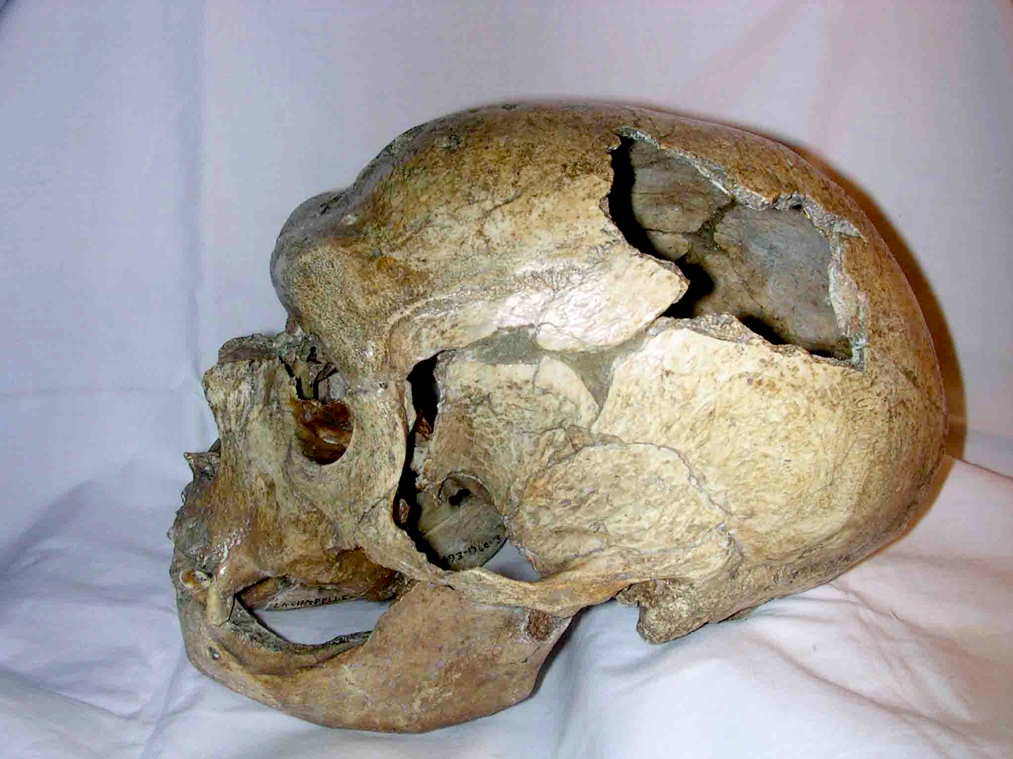
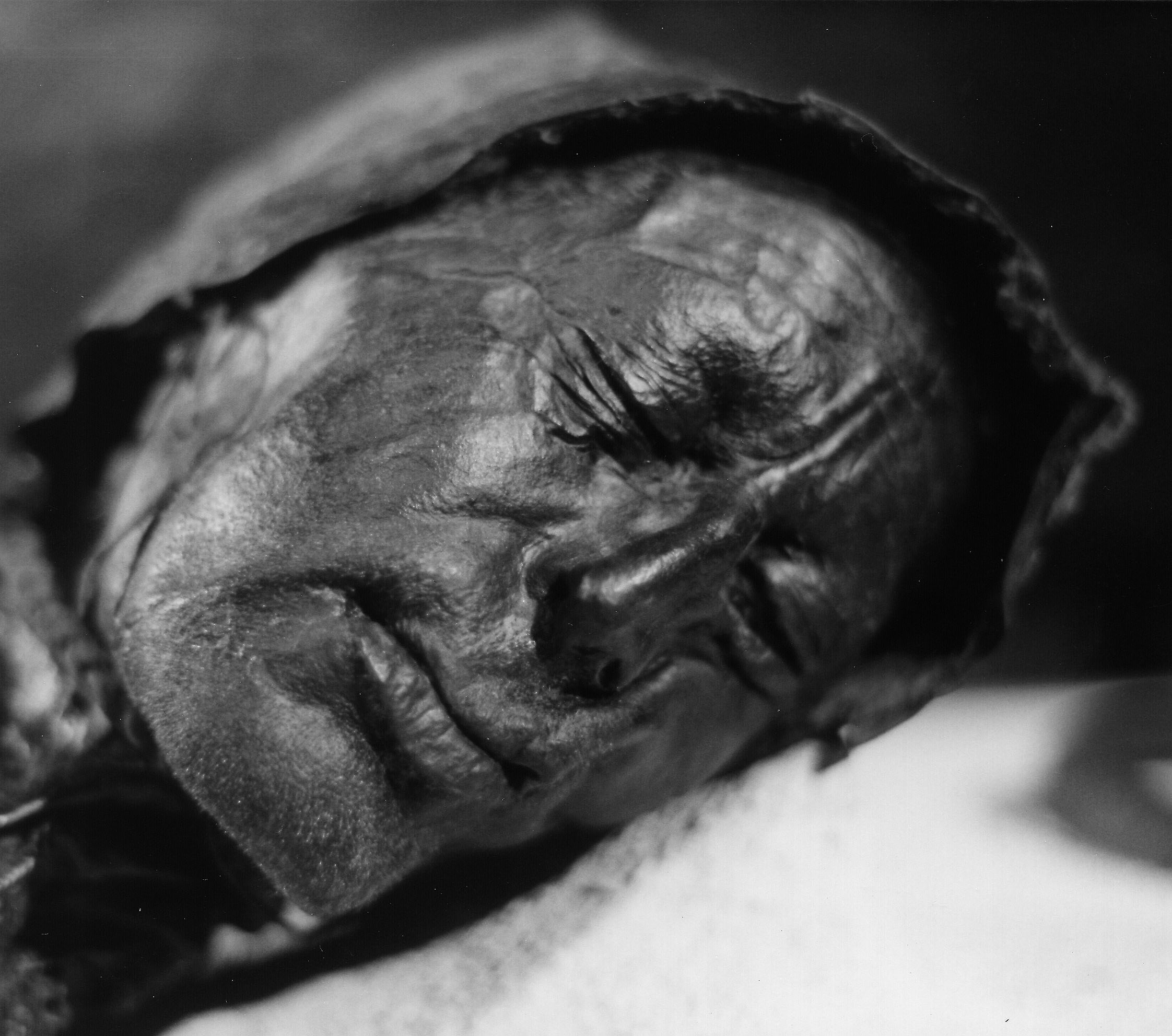
“Sourdoire Valley Song” is not the first Mountain Goats song about someone long-dead whose remains we've found. The album Sweden has another good one, “Tollund Man.”


take care of the old man, see if he's in pain
have somebody stay with him, comfort him when he complains

keep to ourselves mostly: few friends and fewer closer friends
lead a long life if you're lucky, hope it never ends

and then the grass grows up to cover up the firepit and the forge
half a world away from the olduvai gorge


-"Sourdoire Valley Song" by The Mountain Goats

"The Old Man had lost most of his molar teeth before death, suffered from severe arthritis of the lower neck, back, and shoulders, had lived long enough to heal a broken rib, and had a badly deteriorated left hip. Without question, the Old Man had had a hard time of it."

-Erik Trinkaus and Pat Shipman, The Neandertals: Changing the Image of Mankind. New York: Alfred A. Knopf, 1993. (191)


goodbye young danish women
goodbye danish sky
goodbye cold air I am going away
goodbye goodbye goodbye


-"Tollund Man" by The Mountain Goats

“The features are all intact in skin tanned black by the humic acid of a type of 'sour' bog found only in north-west Europe. You look on a man who was not unhandsome, with an aquiline nose, a well-formed mouth and lips, long in the cheek and with a good depth of brow that still shows in every furrow. Even the hat he wore, a pointed cap of pieces of sown hide, is preserved on his head. The wrinkled lids of the eyes have closed as in sleep. The face has a peaceful expression that belies the fact that his end came violently — a rope of twisted leather was round his neck. He was strangled: whether for a crime or for a sacrifice, we will never know. One thing autopsy did reveal about him is that he had a last meal of a kind of porridge.”

-Colin Simpson, The Viking Circle. New York: Fielding Publications, Inc., 1966. (44)

Just for comparison, by the way, I learned that the Homo habilis remains at Olduvai Gorge are dated between 3,200,000 and 1,600,000 years ago. The Old Man of La Chapelle-aux-Saints is estimated to have died about 60,000 years ago, which puts him much, much closer to us than to H. habilis. Tollund Man was killed in about 2,400 years ago.